.png)

The Fourth Key Law of the AEGIS System™
"Nothing starts until something moves."
IMPLEMENTATION
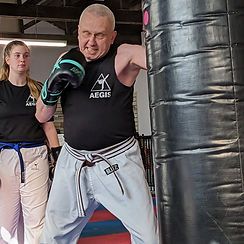
Action Creates Progress
Imagine two children.
Both want to achieve the same goal, believe they can do it and have a clear plan
One starts today, the other waits until they feel ready.
Six months later, which child is closer to achieving their goal?
The answer is obvious.
Knowledge without action changes nothing.
At AEGIS, we teach children that success belongs to those who are prepared to move.
That doesn't mean rushing or being perfect.
It means taking the next right step, even when the outcome isn't guaranteed.
That's why Implementation is the fourth law of the AEGIS System™.
Planning is important. Action is essential.
What Is Implementation?
Implementation is the bridge between knowing and doing.
Many people know what they should do but unfortunately far fewer actually do it consistently.
Children often believe confidence comes before action.
In reality, confidence usually comes because of action.
Every time a child tries something new, practises a skill or overcomes a challenge, they build evidence that they are capable of more than they previously believed.
That's how confidence grows.
As we remind every student:
"Nothing starts until something moves."
Success begins to manifest with movement.


Why Taking Action Matters
Children who regularly take action become more independent.
They learn that progress doesn't happen by accident, it happens through consistent effort.
Implementation helps children develop:
-
Self-discipline.
-
Responsibility.
-
Courage.
-
Perseverance.
-
Independence.
-
Confidence through experience.
-
Consistency.
Perhaps most importantly, children begin to realise that waiting for the perfect moment often means waiting forever.
The Four Supporting Laws of Implementation
Priority
"Put first things first."
Not every task has equal value.
Priority teaches children to recognise which actions will have the greatest impact on their goals.
Successful people don't simply stay busy, they stay focused on what matters most.
Children learn to ask:
-
What's the most important thing I can do today?
-
What should happen first?
-
What can wait until later?
Learning to prioritise helps reduce stress and creates purposeful progress.
Timing
"The greater part of success is in the timing."
Doing the right thing at the wrong time can still produce poor results.
Timing teaches children that preparation and patience often matter just as much as effort.
Sometimes the best decision is to act immediately.
Sometimes it's to wait until the right opportunity appears.
Learning to recognise the difference develops maturity and better decision-making.
Launch Point
"On your marks... Get set... Go!"
Every journey has a starting line.
Launch Point teaches children to prepare themselves before they begin.
Good preparation creates confidence.
Whether it's packing school equipment the night before, preparing for a grading or rehearsing a presentation, starting well often leads to finishing well.
Preparation removes unnecessary obstacles and helps children put their best foot forward.
Failure
"If at first you don't succeed, try, try, try again."
Failure is not the opposite of success, its part of it.
Every successful person has experienced setbacks.
What makes the difference is how they respond.
At AEGIS, children learn that every mistake provides information.
Every setback teaches something valuable.
Failure only becomes permanent when we stop learning.
Children who embrace this law become more resilient because they stop fearing mistakes and start seeing them as opportunities to improve.
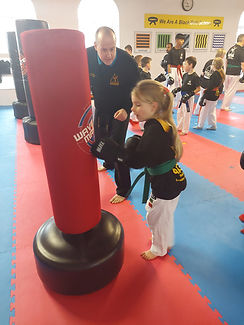
How We Teach Implementation at AEGIS
Children don't build confidence by watching others, they build it by doing.
Every lesson encourages students to:
-
Step outside their comfort zone.
-
Attempt new techniques.
-
Learn from mistakes.
-
Support fellow students.
-
Finish what they start.
-
Celebrate progress rather than perfection.
Over time, action becomes habit. That habit builds success.
Helping Your Child Take Action at Home
Parents can reinforce Implementation every day.
Start before you're ready
Encourage children to begin with the first small step rather than waiting for perfect confidence.
Celebrate consistency
Praise regular effort, not occasional bursts of motivation.
Talk positively about mistakes
Instead of asking:
"Why did you get it wrong?"
Ask:
"What did you learn?"
Focus on today's action
Big goals become manageable when children simply concentrate on the next step.


Action Builds Confidence
Confidence isn't created by thinking differently.
It's created by doing difficult things repeatedly.
Every action creates experience.
Every experience builds confidence.
Every confident child is simply a child who has practised courage many times before.
That's why Implementation is one of the most important principles in the AEGIS System™.
Because nothing changes until something moves.
This Week's Family Success Challenge
Choose one task you've all been putting off.
Count down together:
3... 2... 1... Go!
Spend just ten focused minutes working on it.
Often, getting started is the hardest part.
Once you're moving, momentum usually follows.

Continue Your Journey
Action creates experience. Experience creates learning.
The final principle explains how learning turns today's effort into tomorrow's success.