.png)
EXPECTATION
The Second Key Law of the AEGIS System™
"You don't get what you want, wish or hope for. You only get what you confidently expect."


Success Begins With Belief
Have you ever noticed that two children can face exactly the same challenge and respond in completely different ways?
One says - "I'll never be able to do this."
The other says - "I can't do it yet, but I'll keep trying."
The difference isn't talent, age or intellingence.
More often than not, it's their expectation of themselves.
At AEGIS, we believe that children naturally live up—or down—to the expectations they hold for themselves and those that are consistently reinforced by the people around them.
Children who expect to improve are more likely to practise.
Children who expect challenges are less likely to give up when they encounter them.
Children who expect success understand that success isn't guaranteed—but they believe it is achievable through effort, learning and persistence.
That's why Expectation is the second principle of the AEGIS System™.
It transforms attitude into direction and enables growth. This is why we choose the 'Wood' Element to represent this Law.
What Is Expectation?
Expectation is more than optimism.
It is the standard you accept for yourself.
It's the quiet belief that says - "If I keep doing the right things, I can achieve more than I do today."
This doesn't mean believing success should come easily. Quite the opposite is true in fact.
At AEGIS, we teach children that confidence grows from preparation, discipline and consistent action—not from wishful thinking.
As we remind every student:
"You don't get what you want, wish or hope for. You only get what you confidently expect."
The expectations children develop influence every decision they make.
If they expect to fail, they often stop trying too soon.
If they expect to learn, they become willing to make mistakes.
If they expect to grow, they become open to challenges that once seemed impossible.


Why Expectation Matters for Children
The expectations children hold affect far more than their performance in martial arts training.
They shape how children approach:
-
Schoolwork and homework.
-
Friendships.
-
New experiences.
-
Public speaking.
-
Tests and exams.
-
Sport.
-
Learning new skills.
-
Dealing with setbacks.
Children who develop healthy expectations begin to replace limiting thoughts with constructive questions.
Instead of asking - "What if I fail?"
They begin asking - "What do I need to do to succeed?"
That shift in thinking changes everything.
The Four Supporting Law of Expectation
Predictability
"If you keep on doing what you do, you'll keep on getting what you've got."
Success leaves clues, so does failure.
Predictability teaches children to recognise that today's habits usually create tomorrow's results.
If nothing changes, nothing changes.
If children want different outcomes, they often need different behaviours.
This principle also teaches that success is rarely mysterious, someone has almost certainly achieved the goal before.
That means there is a process to learn from.
Questions parents can ask
-
What habit helped you today?
-
What habit held you back?
-
What small change could you make tomorrow?
Assessment
"Getting the best of any outcome is the balance of risk against the rewards."
Every day, children make decisions.
These can range from something small to something with a lasting impact.
Assessment teaches children to pause before acting.
Instead of reacting impulsively, they learn to ask:
-
What could happen if I do this?
-
What could happen if I don't?
-
Is this helping me move closer to my goal?
Over time, this develops judgement, responsibility and self-control.
Children become more thoughtful decision-makers rather than simply reacting to the moment.
Proximity
"The fighter who controls the distance controls the fight."
Big goals can feel overwhelming.
Proximity teaches children to think about the distance between where they are now and where they want to be.
That distance isn't just measured in time. It's also measured in preparation, effort and progress.
Breaking a large goal into smaller milestones helps children experience regular success, keeping motivation high and making progress feel achievable.
Parents can support this by celebrating small wins instead of waiting for the final result.
Every step forward, no matter how small, deserves recognition.
Balance
"Without balance we can never be wholly successful."
True success isn't measured by one achievement.
A child who excels at sport but neglects their health, friendships or education isn't experiencing complete success.
Balance teaches children that life has many important areas.
At AEGIS, we encourage students to grow as well-rounded individuals by developing:
-
Physical strength.
-
Mental resilience.
-
Emotional intelligence.
-
Respect for others.
-
Lifelong learning.
Success becomes more meaningful when all areas of your life grow together.

How We Teach Expectation at AEGIS
Expectation isn't taught by telling children to "believe in themselves."
It's taught by giving them evidence that they can improve.
Every lesson includes opportunities to:
-
Set goals.
-
Practise consistently.
-
Receive constructive feedback.
-
Celebrate progress.
-
Reflect on achievements.
-
Take responsibility for improvement.
Over time, children begin to expect success—not because it is easy, but because they have experienced the results of disciplined effort.
That confidence stays with them long after they leave the training mats.
Helping Your Child Build Healthy Expectations at Home
Parents play an enormous role in shaping expectations.
Children often borrow their beliefs from the adults around them.
Here are a few simple ways to reinforce this principle at home.
Celebrate progress, not perfection
Recognise effort, improvement and persistence.
Children who see progress are more likely to continue.
Encourage ownership
Instead of solving every problem, ask:
"What do you think your next step should be?"
Responsibility builds confidence.
Set realistic challenges
Goals should stretch children without overwhelming them.
Small successes create momentum - momentum creates belief.
Watch your language
Replace - "You're just not good at maths."
With - "You're getting better every time you practise."
The language children hear often becomes the language they use with themselves.

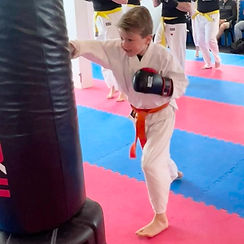
Expectations Shape Reality
Children rarely achieve more than they believe is possible.
Healthy expectations encourage children to prepare, persevere and continue learning even when success takes time.
When children expect growth rather than instant results, they become more resilient, more confident and more willing to embrace challenges.
That's why Expectation is the second principle of the AEGIS System™.
It bridges positive thinking with purposeful action.
This Week's Family Success Challenge
As a family, choose one goal for the week.
It could be learning a new skill, improving a habit or completing a challenge together.
Each evening ask:
-
What progress did we make today?
-
What did we learn?
-
What is our next step?
Notice how focusing on progress rather than perfection changes the conversation.

Continue Your Journey Through the AEGIS System™
Positive expectations prepare children for success.
The next law shows them how to turn those expectations into a practical plan.
Next Key Law of Success → Game Plan
Or, if you'd like to see how children develop these life skills through structured AEGIS Karate and leadership training, we'd love to welcome your family for a free trial at AEGIS Martial Arts & Leadership Academy.